
A Singapore trust company license is a mandatory regulatory authorization granted by the Monetary Authority of Singapore (MAS) that permits companies to conduct trust business activities legally in Singapore under the Trust Companies Act 2005. Without this license, no entity may legally carry on trust business for the public in Singapore. As of June 2026, 66 active licensed trust companies operate under MAS supervision. For business owners and entrepreneurs evaluating entry into Singapore's fiduciary sector, understanding what this license requires and what it commits you to is the essential first step.
What is a singapore trust company license?
A Singapore trust company license is the formal regulatory permission issued by MAS that authorizes a company to provide trust services to clients in Singapore. The legal basis is the Trust Companies Act 2005, which defines "trust business" as the provision of services such as acting as trustee, managing trust assets, and administering estates on behalf of clients. MAS enforces this framework with significant supervisory authority, including the power to investigate, intervene, and revoke licenses.
The license is not a formality. It represents a high regulatory standard, and licensed entities operate in specialized fiduciary capacities rather than as general financial service providers. Singapore's trust sector attracts family offices, wealth managers, and corporate fiduciaries precisely because MAS licensing signals credibility and governance discipline to international clients.

What are the requirements to obtain a trust company license?
MAS sets clear, non-negotiable eligibility criteria for applicants. Meeting these criteria on paper is necessary but not sufficient. MAS evaluates the substance behind each submission.
The core requirements are:
-
Minimum paid-up capital or qualifying assets of S$250,000. This threshold must be maintained continuously, not just at the point of application. Qualifying assets at the prescribed minimum level are a permanent condition of holding the license.
-
At least two resident managers with specified experience. One manager must hold at least five years of relevant experience in trust or fiduciary work. Other managers require a minimum of three years. MAS scrutinizes these appointments closely, and resident managers may be interviewed directly to assess practical fiduciary competence, not just years on a resume.
-
A non-refundable application fee of S$1,000 and an annual license fee of S$4,000. These fee structures are prescribed under the Trust Companies Regulations and are fixed regardless of application outcome.
-
A detailed business plan and management track record. MAS expects applicants to demonstrate a credible operating model, clear client acquisition strategy, and governance framework before granting approval.
-
Submission of current MAS-approved forms. Outdated or incorrect forms result in automatic rejection regardless of the accuracy of the content within them. This is a common and avoidable failure point.
MAS aims to process straightforward applications within six months. Complex or incomplete submissions take longer, sometimes significantly so. Applicants who underestimate internal preparation time frequently extend their own timelines well beyond the official processing window.
Pro Tip: Download MAS forms directly from the MAS website on the day you begin your submission, not weeks earlier. Form versions change without broad announcement, and submitting an outdated version triggers automatic rejection.
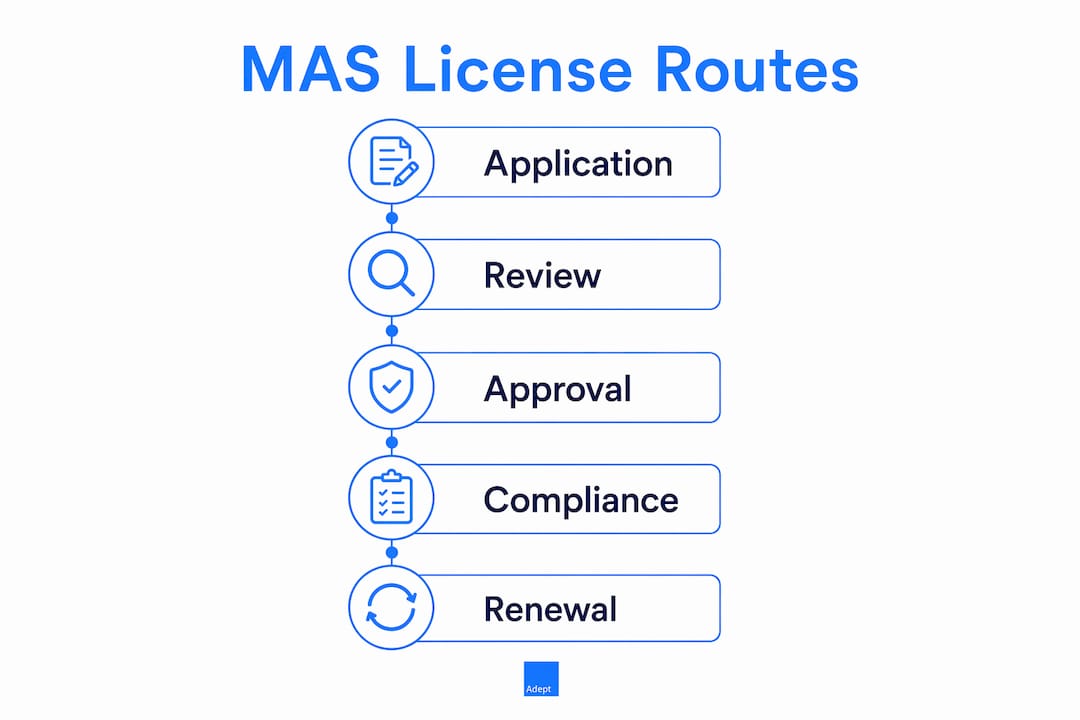
For a structured overview of the different MAS licensing routes available to professional service companies, the 7 MAS license routes guide from Adept Corporate Services provides a useful reference point.
How does a licensed trust company differ from an exempt trust company?
The distinction between a Licensed Trust Company and an Exempt Trust Company is one of the most consequential decisions an entrepreneur will make when structuring a Singapore trust business. The difference impacts compliance burden, permissible client base, and business model options significantly.
| Feature | Licensed Trust Company | Exempt Trust Company |
|---|---|---|
| Client base | General public | Related corporations or qualifying clients only |
| Regulatory oversight | Full MAS supervision | Limited, narrower obligations |
| Capital requirements | S$250,000 minimum | Lower or not applicable |
| Compliance burden | High: reporting, audit, governance | Reduced scope |
| Permitted activities | Full range of trust services | Restricted to specific trust activities |
| Suitable for | Commercial trust service providers | Corporate groups, family structures |
Licensed Trust Companies carry the full weight of MAS regulation. They can serve any client who requires trust services, which makes them commercially viable as standalone businesses. Exempt Trust Companies operate under narrower conditions, typically serving related corporations within a corporate group or a defined category of qualifying clients. They face fewer compliance obligations, but their business scope is correspondingly restricted.
For entrepreneurs building a commercial trust service business intended to serve external clients, the Licensed Trust Company structure is the only viable path. For those structuring trust services within a corporate group or family office, the exempt route may be appropriate and considerably less burdensome. The regulatory framework under the Trust Companies Act and its subsidiary legislation governs both categories, but with materially different obligations attached to each.
What ongoing obligations do licensed trust companies face?
Obtaining the license is the beginning, not the end, of regulatory engagement. MAS imposes continuous obligations that require dedicated internal resources and governance infrastructure.
The key ongoing requirements are:
-
Capital maintenance. Net asset values and qualifying assets must remain at or above the S$250,000 threshold at all times. A breach triggers immediate reporting obligations and potential MAS intervention.
-
Professional indemnity insurance. Licensed trust companies must maintain adequate coverage. MAS specifies minimum standards, and lapses in coverage are treated as compliance failures.
-
Regular reporting and record-keeping. MAS requires periodic financial and operational reports. Record-keeping standards are detailed and must be maintained in a form accessible to MAS examiners.
-
Audit requirements. Annual audits by approved auditors are mandatory. The audit scope covers financial statements, internal controls, and compliance with the Trust Companies Act.
-
Governance and conduct standards. MAS expects licensed trust companies to maintain documented policies on conflicts of interest, client due diligence, and anti-money laundering compliance.
MAS holds broad supervisory authority that includes the power to investigate operations, compel document production, intervene in management decisions, and suspend or revoke licenses. Non-compliance is not treated leniently. Revocation ends the ability to carry on trust business and can trigger reputational consequences that affect related entities.
Pro Tip: Treat MAS compliance as a standing operational function, not an annual filing exercise. Assign a dedicated compliance officer from day one. Companies that retrofit compliance infrastructure after receiving their license consistently face higher remediation costs and greater regulatory scrutiny.
For guidance on building a compliance function that meets MAS standards, Adept Corporate Services offers regulatory compliance support tailored to licensed financial entities in Singapore.
What steps should entrepreneurs take to apply successfully?
A successful application requires preparation that begins months before the formal submission date. The trust company license application process rewards thoroughness and penalizes shortcuts.
Follow these steps to position your application for approval:
-
Conduct a pre-application consultation with MAS. MAS accepts pre-application meetings for prospective trust company applicants. Use this opportunity to clarify expectations, confirm your proposed business model is acceptable, and identify any structural issues before they become rejection grounds.
-
Select resident managers with genuine fiduciary expertise. Credentials matter, but MAS looks beyond paper qualifications. Managers with direct experience in trust administration, estate planning, or fiduciary advisory roles are far stronger candidates than those with adjacent financial services backgrounds. MAS has been known to interview proposed managers directly.
-
Build your governance framework before you apply. Policies on anti-money laundering, client due diligence, conflicts of interest, and data protection should be drafted and reviewed before submission. MAS expects to see a functioning governance structure, not a plan to build one after approval.
-
Verify every document against current MAS requirements. Use only the latest MAS-approved forms. Cross-reference your submission against the current Trust Companies Regulations to confirm all required annexes and supporting documents are included.
-
Set realistic internal timelines. Internal governance preparation and key management vetting commonly delay approvals beyond the official six-month processing window. Build a minimum of three to four months of internal preparation time before your target submission date.
-
Plan for post-license compliance from the start. Design your operating model with ongoing MAS obligations built in. Companies that treat compliance as an afterthought face costly restructuring once operations begin.
For entrepreneurs who are also navigating company formation alongside the licensing process, the corporate treasury services offered by Adept Corporate Services address both the financial prerequisites and the structural requirements that MAS evaluates.
The regulatory bar is higher than most entrepreneurs expect
From Wandy & Terence at Adept Corporate Services:
After working with clients through multiple MAS trust company license applications, the single most consistent observation is this: entrepreneurs routinely underestimate how seriously MAS takes the substance of an application, not just its form.
The 66 active licensed trust companies in Singapore represent a deliberately selective pool. MAS does not grant licenses to demonstrate openness to new entrants. It grants licenses to entities that can demonstrate, with evidence, that they are capable of operating as responsible fiduciaries. That distinction matters enormously when you are preparing your submission.
The most common misconception we encounter is that meeting the minimum capital and manager experience thresholds is sufficient. It is not. MAS evaluates the quality of your governance documentation, the credibility of your business plan, and the practical competence of your proposed managers. We have seen well-capitalized applications stall for months because the proposed resident managers could not articulate their fiduciary decision-making process under MAS questioning.
The choice between a Licensed Trust Company and an Exempt Trust Company also deserves more careful analysis than most entrepreneurs give it. Many clients initially pursue the full license without fully considering whether their intended client base and business model actually require it. Choosing the wrong structure creates unnecessary compliance burden without corresponding commercial benefit.
Our advice is direct: engage professional advisers before you begin preparing your application, not after your first rejection. The regulatory environment around trust company licensing in Singapore is not punitive, but it is unforgiving of preparation failures. Tools like IntelliAudit AI are increasingly used by compliance teams to manage audit readiness, which reflects how seriously licensed entities treat their ongoing obligations.
— Wandy & Terence
How adept corporate services supports trust company license applicants
Adept Corporate Services works directly with business owners and entrepreneurs navigating the Singapore trust company licensing process from initial structuring through to post-license compliance.
Our team provides hands-on advisory support across every stage: evaluating whether a Licensed or Exempt Trust Company structure fits your business model, preparing governance documentation that meets MAS standards, identifying and vetting qualified resident managers, and managing the submission process to avoid the form and documentation errors that cause avoidable delays. For entrepreneurs who are simultaneously setting up their corporate structure, our company formation services cover the full incorporation and compliance setup alongside the licensing process. Contact Adept Corporate Services directly to speak with an adviser who has managed trust company license applications from start to finish.
FAQ
What is a singapore trust company license?
A Singapore trust company license is a regulatory authorization issued by MAS under the Trust Companies Act 2005 that permits a company to legally carry on trust business in Singapore. Without this license, providing trust services to the public is prohibited.
How long does the MAS trust license application take?
MAS targets a six-month processing timeline for straightforward applications, but complex or incomplete submissions take longer. Internal governance preparation and manager vetting frequently extend the total timeline beyond six months.
What is the minimum capital required for a trust company license?
Applicants must maintain a minimum paid-up capital or qualifying assets of S$250,000. This is a continuous requirement, not a one-time threshold met only at the point of application.
What is the difference between a licensed and exempt trust company?
Licensed Trust Companies serve the general public with full MAS regulatory oversight, while Exempt Trust Companies operate under narrower scopes, typically serving related corporations or specific qualifying clients with reduced compliance obligations.
How much does it cost to apply for a trust company license in singapore?
The application fee is S$1,000 (non-refundable) and the annual license fee is S$4,000, as prescribed under the Trust Companies Regulations. These fees apply regardless of the size or complexity of the applicant's business.
Key takeaways
A Singapore trust company license requires meeting strict MAS capital, management, and governance standards before and after approval, with ongoing compliance obligations that demand dedicated internal resources.
| Point | Details |
|---|---|
| License definition | MAS authorization under the Trust Companies Act 2005 to legally conduct trust business in Singapore. |
| Capital threshold | S$250,000 in paid-up capital or qualifying assets must be maintained continuously, not just at application. |
| Manager requirements | At least two resident managers required: one with 5+ years and others with 3+ years of fiduciary experience. |
| Licensed vs. Exempt | Licensed companies serve the general public; Exempt companies serve related corporations or qualifying clients only. |
| Ongoing obligations | MAS requires continuous capital maintenance, professional indemnity insurance, annual audits, and regular reporting. |
Recommended
- Singapore Single Family Office 2026 Guide | Adept Corporate Services
- Starting and Setting Up a Business or Company in Singapore | Adept Corporate Services
- Singapore Company Registration: Your Gateway to Business Success | Adept Corporate Services
- 2026 Statutory Compliance Calendar for a Singapore Company | Adept Corporate Services